
[Solution] VERYWORDS, Korea’s first “International Carbon Reduction” case – 680,000 tons of emission reduction recognized by the Cambodian government, shifting from international aid to climate cooperation
“Approval has been granted.”
When Kim Sung-woo, CEO of VERYWORDS, delivered the news, an official from the Ministry of Trade, Industry and Energy’s (MOTIE) International Mitigation Team almost choked up with emotion.
“Thank you for your tremendous effort. This is the very first success in our ‘International Carbon Reduction’ projects.”
VERYWORDS signed a memorandum of understanding (MOU) with the Cambodian government for carbon credit cooperation in February. As of July 21, the project has finally received official approval, making it eligible for international carbon reduction trading.
Seven years ago, when VERYWORDS launched its electric motorbike project in Cambodia, few believed such a result was possible. Kim’s conviction and strategic gamble have paid off.

Why This Matters
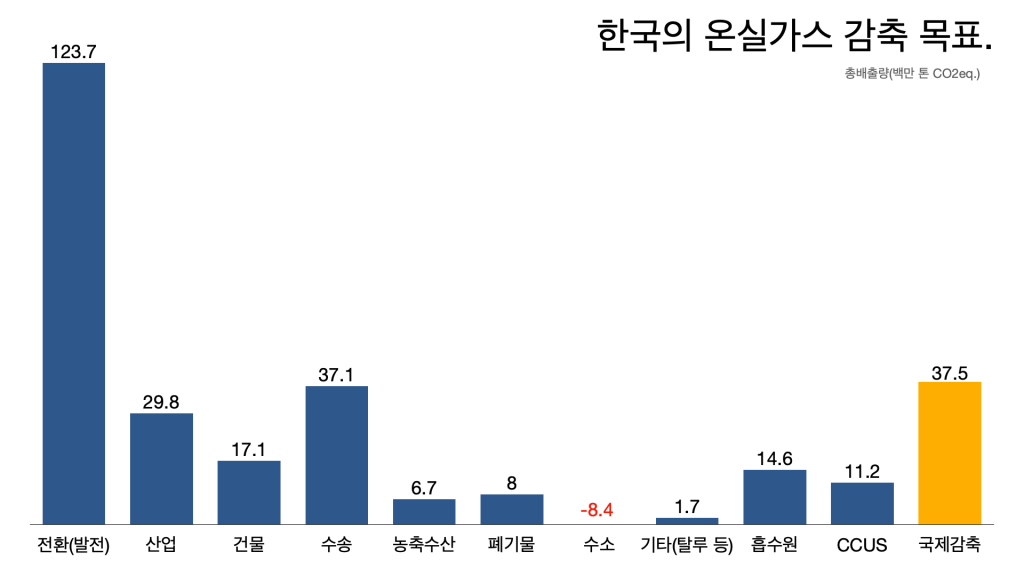
Under the Paris Climate Agreement, South Korea must reduce 291 million tons of CO₂ emissions by 2030, compared to 2018 levels.
Of that, 11.5% (37.5 million tons) is planned to come from “International Carbon Reduction” (ICR) activities.
Despite being the second-largest component of Korea’s Nationally Determined Contribution (NDC), the ICR program had zero recognized results until now.
MOTIE has signed agreements with 13 countries and MOUs with 8, but none of the projects had received formal approval—VERYWORDS is the first.
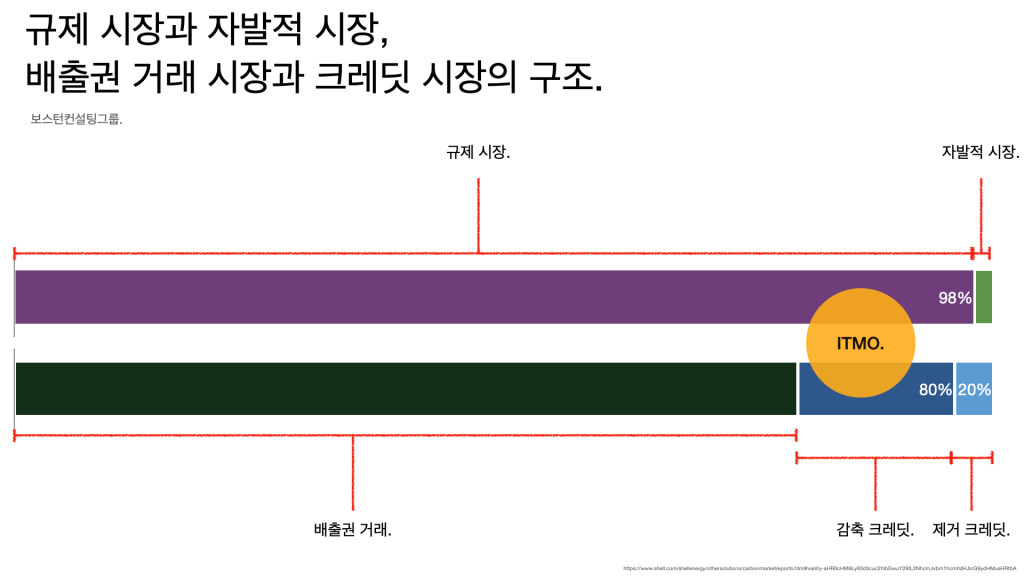
International Carbon Reduction, officially known as ITMO (Internationally Transferred Mitigation Outcomes), is a mechanism where emission reductions achieved in one country can be transferred and counted toward another country’s NDC.
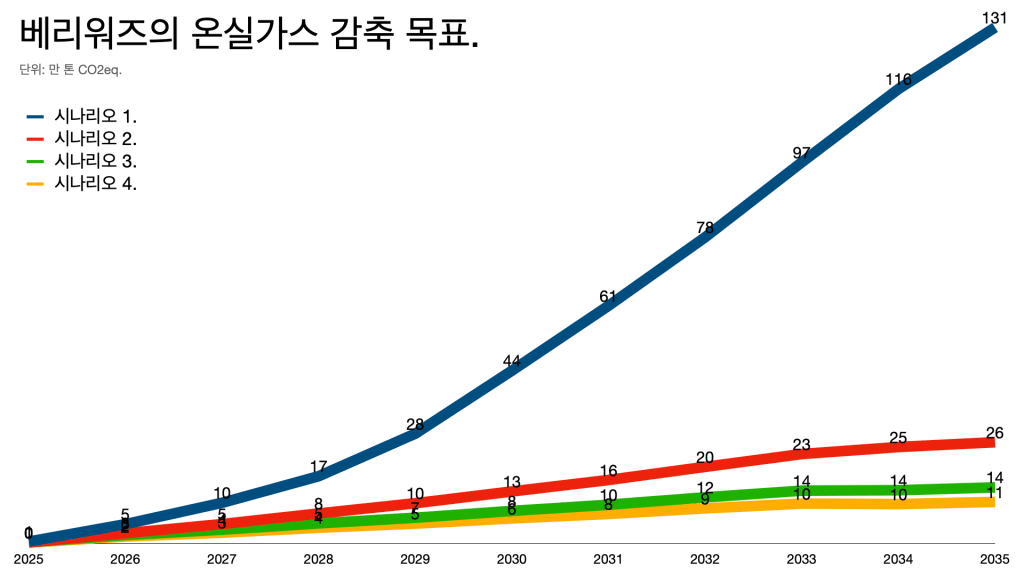
The Cambodian government has initially recognized 680,000 tons of CO₂ reduction by VERYWORDS. These are projected future reductions, acknowledged in advance. VERYWORDS expects the total impact could reach 5.8 million tons by 2035.

A New Market for International Carbon Reduction
International Carbon Reduction (ICR) differs from traditional domestic carbon trading:
- Domestic carbon trading is company-to-company and managed by governments.
- ICR (ITMO) is a nation-to-nation transaction, requiring strict verification under Article 6.2 of the Paris Agreement.
For example:
- A Korean company contributes to CO₂ reduction in Cambodia.
- By default, the reduction counts toward Cambodia’s target.
- If Cambodia officially recognizes the contribution as ICR, the credits can be sold to Korea, allowing Korea to count the reduction toward its own NDC.
VERYWORDS’ Five Key Strategies
1. Entering Cambodia for Market Creation, Not Just Selling Motorbikes
- CEO Sungwoo Kim was originally a consultant.
- Predicting that the “international reduction” trading market would take off, he began looking for business opportunities in developing countries and chose Cambodia. During his market research, he became convinced that electric motorcycles would work there.
- Selling more motorcycles in Vietnam is difficult, but Cambodia is an emerging market. Vietnam has about 66 motorcycles per 100 people, while Cambodia is at around 33—meaning the market could more than double.
- Cambodia currently has 5.8 million motorcycles. By 2050, that number is expected to grow to 12.5 million, and if 70% of them become electric, that would be a market of 8.7 million electric motorcycles.
- “We have to capture this market.” Kim did not go to Cambodia just to sell motorcycles; he went to build a market for “international reduction” trading.
- Electric motorcycles can demonstrate their carbon reduction impact with data. The past seven years for VERYWORDS have been about gathering that data.
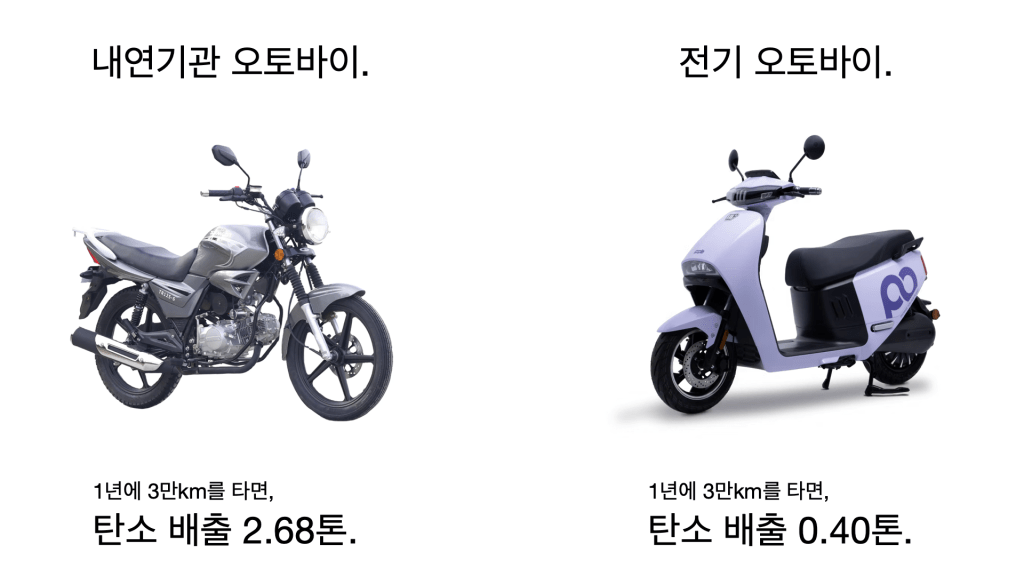
2. Each Electric Motorbike Reduces 2.7 Tons of CO₂ Annually
VERYWORDS’ motorbike:
- Range: 100 km per full charge
- Gasoline bike: emits ~3.21 tons of CO₂ per year (at 100 km/day)
- Electric bike: emits ~0.49 tons of CO₂ per year (accounting for grid emissions)
Net reduction: 2.73 tons/year per commercial-use motorbike
Commuter bikes (25 km/day) reduce ~0.68 tons/year.
3. Removing the Battery and Selling via Membership
Electric motorbikes are expensive mainly due to batteries. VERYWORDS:
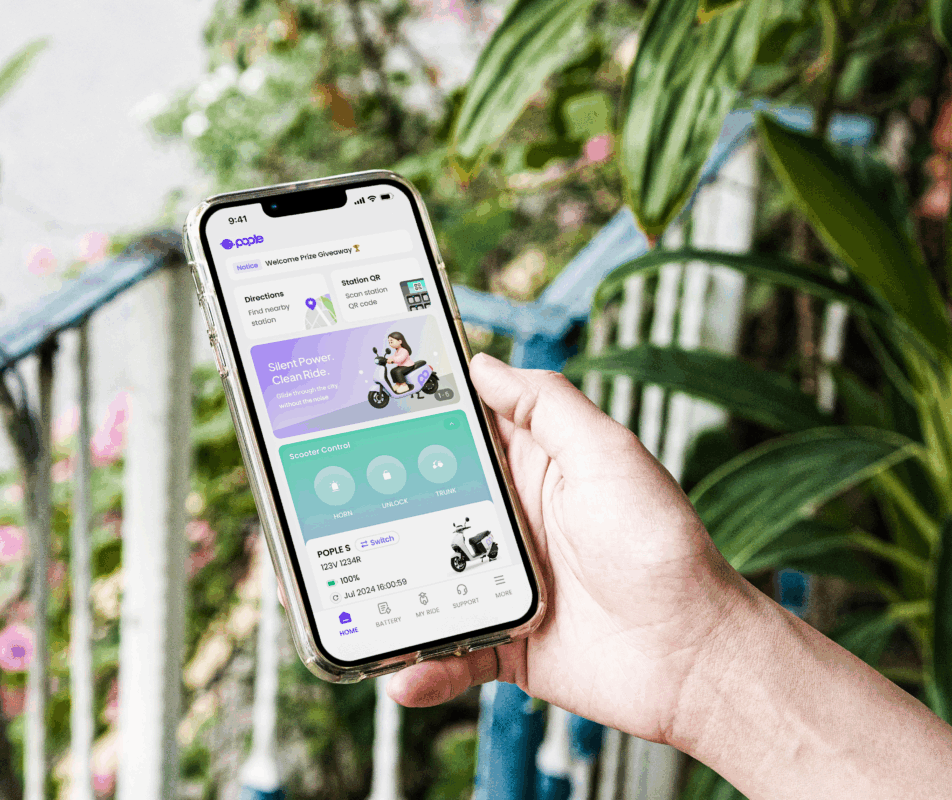
- Removed two $500 batteries to lower unit price to $1,600
(vs. ~$2,600 for gasoline bikes) - Introduced Pople, a battery-swap membership model:
- $2/month – 60 km
- $8.98/month – 360 km
- $48.9/month – Unlimited swaps
Result: Competitive pricing despite slightly lower performance than Honda or Yamaha.
4. Offering 8,000 Motorbikes for Free to the Cambodian Government
A high-risk, high-reward move:
- Donated 8,000 units (worth ~$16 million) to government officials
- Replaced every 2 years with new units
- 5-fold benefit strategy:
- Secured tax exemptions on imports
- Refurbished returned bikes for resale
- Charging stations funded by the government
- Free bikes = natural promotion
- Profit generated through membership services
The Cambodian government couldn’t refuse: free bikes in exchange for acknowledging emission reductions.
Result: 680,000 tons initially recognized; potential up to 11 million tons by 2035.
5. Each Motorbike Yields a $300–$1,000 Subsidy Effect
VERYWORDS secured 400,000 tons of ICR credits and sold them to MOTIE for ₩6 billion (~$4.6M),
equivalent to ₩15,000 per ton (~$11).
- Over 10 years, a single bike driving 35,000 km/year yields ₩400,000 (~$300) in ICR value.
- If carbon credit prices rise to ₩50,000 per ton, each bike could yield ₩1.3M (~$1,000).
Effectively, ICR trading acts as a government subsidy, allowing VERYWORDS to sell bikes at half price.
Data Was the Key
ICR transactions demand strict MRV (Monitoring, Reporting, Verification):
- Every motorbike equipped with an IoT module
- Tracks mileage, battery status, swap frequency, and power usage in real time
- Directly quantifies daily CO₂ reduction
VERYWORDS developed its verification framework with GGGI (Global Green Growth Institute),
based on UNFCCC AMS-III.C methodology, ensuring transparent and credible emission reduction claims.
Read Deeper: Learning from the Failure of the “Cook Stove” Projects
One of the most notable failures in past international carbon reduction initiatives is the “Cook Stove” project. Comparing this with Verywords’ data-driven international mitigation transactions highlights why the approach is fundamentally different.
The “Cook Stove” program aimed to reduce carbon emissions in developing countries by distributing high-efficiency, low-emission cooking devices to households that still relied on burning wood for cooking. Companies such as Samsung Electronics, SK, Korea Electric Power Corporation, and Sampyo Cement participated in these projects in countries like Kenya and Myanmar and were credited with carbon reduction achievements.
However, research by Plan 1.5 revealed that the reported impact was overstated by at least 5.6 times and up to 68.9 times. An analysis of 310 project sites found that while the reported emissions reductions totaled 9.74 million tons, the actual reductions amounted to only 530,000 tons.
The production cost of a single cook stove was roughly 3,000 KRW (about $2.30 USD), but each stove was credited with 2–4 tons of greenhouse gas reductions annually. With carbon credit prices between 2021 and 2024 averaging around 19,000 KRW (approximately $15 USD) per ton, each stove could generate over 15,000 KRW ($12 USD) in profit.
The core issue was data. There was no accurate measurement of how much carbon the cook stoves actually reduced. Historical deforestation levels were unclear, and the actual usage of stoves after distribution was poorly monitored.
Some analyses even concluded that of the 98 million tons of claimed reductions, more than 93 million tons were likely overestimated.
Read Deeper: The Difference Between CDM and ITMO
The reason poorly designed projects like the “Cook Stove” initiatives were once possible lies in the lax certification and verification standards of the Clean Development Mechanism (CDM) under the Kyoto Protocol framework.
CDM, which operated before the 2016 Paris Agreement, did not require emission reductions to be subtracted from the host country’s inventory. This meant that even when reductions were overstated, host countries had little incentive to dispute the claims.
Today, CDM credits are still used in voluntary markets or corporate social responsibility (CSR) projects, but their credibility has significantly declined, and they do not count toward any Nationally Determined Contributions (NDCs).
In contrast, Internationally Transferred Mitigation Outcomes (ITMOs) require explicit approval from the host country. Even if 100,000 cook stoves were distributed in Kenya, the credits would be meaningless unless the Kenyan government officially recognized the reductions.
Moreover, even if two countries agree, the project must be reported to the UNFCCC and undergo rigorous verification under the Enhanced Transparency Framework (ETF). Projects like the “Cook Stove” are considered highly vulnerable under this standard.
ITMOs involve transferring one country’s verified emissions reductions to another. Because both parties’ interests must align and double-counting is structurally prevented, precise performance measurement is mandatory.
Read Differently: Why Korea’s Emissions Trading Market Has Struggled
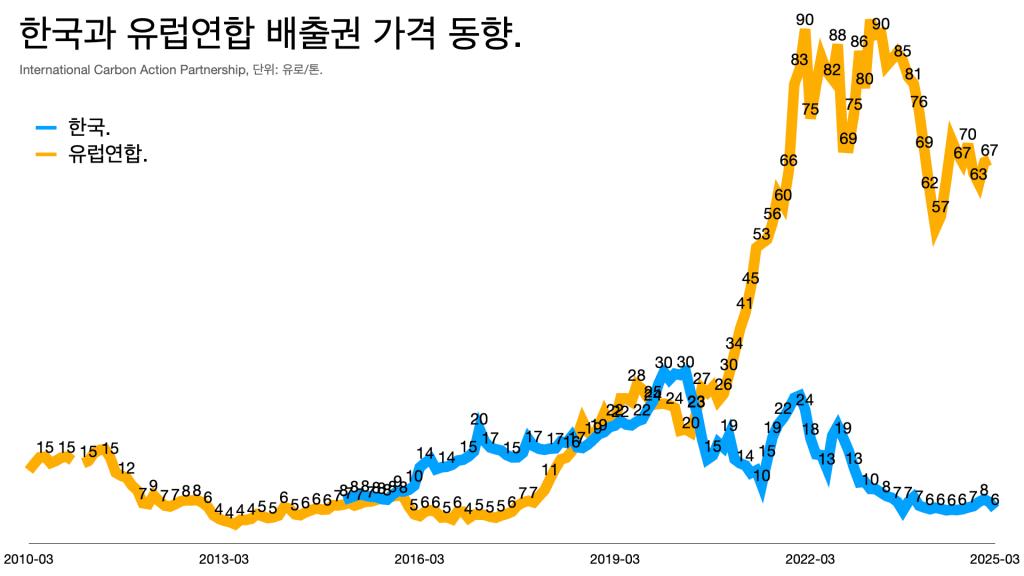
South Korea’s carbon market has been sluggish because most trading volume consists of government-allocated allowances (KAUs), while trading in voluntary credits (KOCs) or offset credits (KCUs) remains extremely limited.
As Kim Tae-han, senior researcher at the Korea Sustainable Investment Forum, puts it:
- Allocated allowances are like “permits to do bad things, given in advance.”
- Voluntary credits are like “a gold star sticker you receive after doing something good.”
Critics argue that emissions allocations for major corporations are set far too generously. Companies would only seek cheaper voluntary carbon markets if their emissions far exceeded their allocated allowances, but there is little incentive under current conditions.
The price of carbon allowances is also low. As of March 14, the price of KAU24 was ₩9,000 per ton, roughly one-tenth the price of the EU Emissions Trading System (around €70 per ton).
Because Korea’s carbon market remains stagnant, the concept of “international mitigation” has been of limited domestic importance. The system has faced criticism for being overly dependent on supplementary measures and for being perceived as easy to manipulate.
The first results from VERYWORDS are significant because they demonstrate new potential in the international mitigation market.
According to Ahn Eun-joo, Vice President of VERYWORDS:
“As the pressure to meet Korea’s 2030 national emissions targets intensifies, allowance prices are bound to rise.
International mitigation credits will eventually align with European allowance price levels.”
Read Differently: A Carbon-Reduction Ecosystem Was Needed
CEO Kim Sung-woo believed that the success of this project depended on building a complete ecosystem. Electric motorcycles themselves are not a highly technical business and have low barriers to entry.
However, if you deploy hundreds of battery-swap stations across a single city, get hundreds of thousands of users to join a membership program, and create a real-time system to track carbon reduction, the philosophy of the city itself can change.
VERYWORDS is not simply selling electric motorcycles—it is working to expand a sustainable ecosystem that links finance and tourism. The company is forming partnerships that range from government officials to banks and food delivery companies, effectively building new national infrastructure. Currently, Woori Bank’s door-to-door sales staff and Foodpanda delivery riders are using VERYWORDS’ electric motorcycles.
They have also created a circular model in which used batteries are regenerated into black powder and supplied to Korean battery manufacturers.
VERYWORDS has become a powerful example proving that carbon reduction can be profitable.
Keyword: The 37.5-Million-Ton “International Reduction” Market
The South Korean government has pledged to reduce 37.5 million tons of emissions through “international reduction” projects by 2030.
VERYWORDS has initially been credited with 680,000 tons of reductions, selling 400,000 tons of that to the Korean government for 6 billion KRW.
If we calculate 37.5 million tons at 15,000 KRW per ton, the market is worth 562.5 billion KRW. If market projections that prices could rise to 50,000 KRW per ton prove accurate, this would open up a market approaching 2 trillion KRW.
The Lee Jae-myung administration has declared that it will not cut the ODA budget, and part of that budget could potentially be allocated to support “international reduction” initiatives.
Conclusion: “International Reduction” Transactions, From Development Aid to Climate Cooperation
The Korean government needed “international reduction” credits, while the Cambodian government urgently needed sustainable development and foreign aid. VERYWORDS targeted the exact intersection where the interests of both countries aligned.
ODA (Official Development Assistance) had clear limitations. ODA ends once the support is delivered, whereas ITMO changes ecosystems, builds markets, and scales them. It is a new model of private-sector-led climate cooperation.
This project opened significant opportunities not only for the Cambodian government but also for the Korean government. There is growing expectation that it could become a turning point for the previously stagnant “international reduction” initiatives.
Cambodia is a young country with a median age of 26.2 years. VERYWORDS plans to go beyond simply supplying electric motorcycles by expanding its IoT-based membership services into smart city infrastructure and fintech platforms.
After establishing a foothold in Siem Reap, home to Angkor Wat, VERYWORDS expanded into the capital city of Phnom Penh and is now exploring opportunities in other Southeast Asian countries.
An investment officer from an asset management firm that participated as an early investor in VERYWORDS evaluated, “VERYWORDS is positioning itself not just as a technology company, but as a policy-driven private partner.”
Somi Kim, Director at GGGI and a contributor to the ITMO guidelines, assessed, “This will serve as an important reference model, providing climate investment channels to developing countries and accelerating the achievement of global climate mitigation goals.”
Oh Hyun, Deputy Director of the International Reduction Team at the Ministry of Trade, Industry and Energy, told Slow News, “The reason ITMO projects have not achieved meaningful results so far is that they failed to create sustainable reduction models.”
He added, “The Cambodian government also saw this as a valuable opportunity, and the fact that the two countries established a working group to resolve governance issues was a key factor in the project’s success.”
Source | Slow News, July 20, 2025
Read the full article
 베리워즈
베리워즈 
댓글 남기기